


Cheque Dishonour In Pakistan | Al Syed Law
Dishonor of a cheque, also known as bounced or returned cheque, occurs when a cheque presented for payment is not honored by the bank due to insufficient funds in the account, irregular signature, or other reasons specified under the law. This act is considered a criminal offense in many jurisdictions and is punishable under laws governing negotiable instruments.
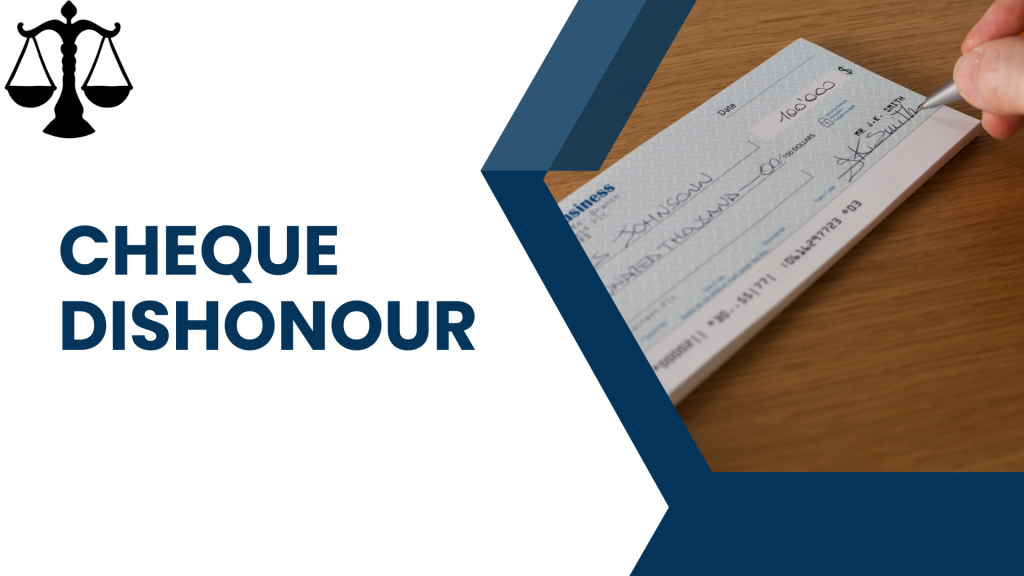
The dishonor of a cheque can have serious legal consequences for both the issuer (drawer) and the recipient (payee). The payee may incur financial losses, while the drawer may face criminal prosecution and civil liabilities.
In many countries, including India and Pakistan, the dishonor of a cheque is governed by specific legal provisions, such as Section 138 of the Negotiable Instruments Act, 1881. According to these provisions, the payee can initiate legal action against the drawer by issuing a legal notice demanding payment within a specified period. If the payment is not made within the stipulated time, the payee can file a criminal complaint, leading to potential imprisonment and monetary penalties for the drawer.
Overall, dishonor of a cheque is a serious legal matter that requires prompt attention and resolution to avoid legal consequences and protect the rights of both parties involved.
Cheque Dishonour Law In Pakistan
In Pakistan, the dishonor of a cheque is governed by the provisions of the Negotiable Instruments Act, 1881. Section 489-F of the Act specifically addresses the offense of dishonor of cheques due to insufficient funds or other reasons.
According to the law, if a cheque issued by a person is dishonored by the bank on which it is drawn, the payee has the right to initiate legal proceedings against the drawer. The payee must issue a legal notice to the drawer within 30 days of receiving the intimation of dishonor from the bank, demanding payment of the amount mentioned in the cheque.
If the drawer fails to make payment within 15 days of receiving the legal notice, the payee can file a complaint in a court of law. Upon conviction, the drawer may face imprisonment for a term extending up to three years or payment of a fine, or both.
It’s important to note that the dishonor of a cheque is a criminal offense in Pakistan, and legal action can be taken against the drawer even if the dishonor was unintentional. Therefore, individuals should ensure that they have sufficient funds in their bank accounts before issuing cheques to avoid legal consequences.
Reasons And Types Of Dishonor Of Cheque
In Pakistan, dishonor of a cheque can occur due to various reasons, and each type of dishonor carries legal implications under the Negotiable Instruments Act, 1881. Here are the types of dishonor of a cheque recognized in Pakistan:
Insufficient Funds:
- This is the most common reason for dishonor of a cheque. It occurs when the drawer’s account does not have sufficient funds to cover the amount mentioned in the cheque.
- Section 138 of the Negotiable Instruments Act, 1881, provides legal recourse for the payee in case of dishonor due to insufficient funds.
Account Closed:
- If the drawer’s bank account is closed at the time the cheque is presented for payment, the cheque will be dishonored.
- The closure of the account could be due to various reasons, such as the account holder’s request, bank’s decision, or legal action against the account holder.
Payment Stopped by Drawer:
- The drawer may instruct the bank to stop payment on a particular cheque before it is presented for payment. This could be due to various reasons, such as a dispute with the payee or a change in circumstances.
- Section 29 of the Negotiable Instruments Act, 1881, provides for the drawer’s right to countermand payment of a cheque.
Irregular Signature:
- If the signature on the cheque does not match the specimen signature available with the bank, the bank may dishonor the cheque.
- This could occur due to forgery, unauthorized signing, or discrepancies in the signature.
Post-Dated Cheque:
- A post-dated cheque is one that is dated for a future date. If such a cheque is presented for payment before the date mentioned on it, the bank may dishonor it.
- However, in practice, post-dated cheques are often honored if presented before the date mentioned, unless the drawer has given specific instructions to the bank not to honor them earlier.
Stale Cheque:
- A stale cheque is one that is presented for payment after a certain period, typically six months from the date of issue. Banks may refuse to honor stale cheques.
- Section 59 of the Negotiable Instruments Act, 1881, provides for the payment of stale cheques, but banks may have their policies regarding honoring such cheques.
Crossed Cheque:
- A crossed cheque is one that has two parallel lines drawn across it, indicating that the payment should be made only through a bank and not in cash.
- If a crossed cheque is presented for cash payment, the bank may dishonor it.
Material Alteration:
- If there is any material alteration made on the cheque without the drawer’s consent, such as changes in the amount, payee’s name, or date, the bank may dishonor it.
- Section 87 of the Negotiable Instruments Act, 1881, provides for the consequences of material alteration of a cheque.
Technical Reasons:
- Some technical reasons, such as encoding errors, mismatched account numbers, or system failures, may lead to the dishonor of a cheque.
- While these reasons may not be the fault of the drawer, the bank may still dishonor the cheque until the technical issue is resolved.
Legal Restrictions:
- In certain cases, legal restrictions or court orders may prevent the bank from honoring a cheque. This could include situations where the drawer’s assets are frozen or subject to legal proceedings.
Each type of dishonor of a cheque carries legal implications for both the drawer and the payee. The payee has the right to take legal action against the drawer under Section 138 of the Negotiable Instruments Act, 1881, which provides for criminal penalties in case of dishonor of a cheque due to insufficient funds. It’s essential for individuals to be aware of these types of dishonor and their legal consequences to avoid potential liabilities and legal disputes.
Procedure To Case A File? Cheque Dishonour Case
Casing a file for a cheque dishonour case involves several steps, including legal procedures and documentation. Here’s a comprehensive guide to the process:
Consultation with a Lawyer:
- Before initiating legal action, consult with a lawyer specializing in cheque dishonour cases. They can provide guidance on the legal requirements, potential outcomes, and the best course of action based on your specific situation.
Gathering Evidence:
- Collect all relevant evidence to support your case, including the dishonored cheque, the bank’s dishonor memo, the legal notice sent to the drawer, and any communication between you and the drawer regarding the cheque.
Legal Notice to Drawer:
- Under Section 138 of the Negotiable Instruments Act, 1881, the payee must issue a legal notice to the drawer within 30 days of receiving intimation of the dishonor from the bank. The notice should demand payment of the cheque amount within 15 days of receipt.
Drafting the Legal Notice:
- The legal notice should be drafted carefully, clearly stating the facts of the case, including details of the dishonored cheque, the amount involved, and the reasons for dishonor. It should also specify the consequences of non-payment, including legal action.
Sending the Legal Notice:
- Send the legal notice to the drawer via registered post or courier with acknowledgment due. Keep a copy of the notice and the postal receipt as proof of service.
Waiting Period:
- After sending the legal notice, wait for the stipulated period (15 days) for the drawer to make payment. If the drawer fails to pay within this period, you can proceed with filing a case in court.
Filing the Case:
- If the drawer does not comply with the legal notice, file a complaint under Section 138 of the Negotiable Instruments Act, 1881, before the appropriate court having jurisdiction over the matter.
- The complaint should be filed within 30 days of the expiry of the 15-day period mentioned in the legal notice.
Drafting the Complaint:
- Prepare the complaint outlining the details of the dishonored cheque, the legal notice issued, and the drawer’s failure to make payment within the stipulated period. Include all relevant evidence and supporting documents.
Court Fees and Stamp Duty:
- Pay the requisite court fees and stamp duty for filing the complaint, as per the applicable laws and court rules.
Submission of Complaint:
- Submit the complaint along with the supporting documents to the court’s registry for filing. Ensure that you retain copies of all documents for your records.
Issuance of Summons:
- Upon filing the complaint, the court will issue summons to the drawer, requiring them to appear before the court on a specified date for trial.
Trial Proceedings:
- Attend the court hearings as scheduled and present your case before the judge. You may be required to testify and provide evidence to prove your claim of cheque dishonor.
Cross-Examination:
- The drawer may have the opportunity to cross-examine you and challenge your evidence during the trial proceedings.
Judgment:
- After considering the evidence and arguments presented by both parties, the court will render its judgment. If the court finds in your favor, it may order the drawer to pay the cheque amount along with any additional penalties or costs.
Appeal:
- If either party is dissatisfied with the court’s judgment, they may file an appeal before the appropriate appellate court within the prescribed time frame.
Casing a file for a cheque dishonour case involves a systematic approach, including legal notice issuance, filing a complaint in court, attending trial proceedings, and securing a judgment. It’s essential to follow the legal procedures diligently and seek guidance from a qualified lawyer to navigate the process effectively and protect your rights as a payee.
Where To File A Case Of Cheque Dishonour
A case of cheque dishonour should be filed in the appropriate court having jurisdiction over the matter. In Pakistan, cheque dishonour cases are typically filed in the Magistrate Court or the Banking Court, depending on the amount involved and the specific circumstances of the case.
Magistrate Court:
- For cheque dishonour cases involving smaller amounts, typically up to a certain monetary limit as determined by the relevant laws, the case may be filed in the Magistrate Court. Magistrate Courts have jurisdiction over criminal matters, including cases under Section 138 of the Negotiable Instruments Act, 1881.
Banking Court:
- For cheque dishonour cases involving larger amounts or more complex legal issues, the case may be filed in the Banking Court. Banking Courts specialize in handling disputes related to banking transactions, including cases of cheque dishonour and other financial matters.
It’s essential to consult with a lawyer familiar with the local legal system to determine the appropriate court for filing your cheque dishonour case. The lawyer can provide guidance on the jurisdictional requirements and assist you in preparing and filing the case in the designated court.
Cheque Dishonour Punishment In Pakistan
In Pakistan, the punishment for cheque dishonour is outlined under Section 138 of the Negotiable Instruments Act, 1881. If a cheque issued by a person is dishonoured by the bank due to insufficient funds or other reasons, the payee has the right to initiate legal proceedings against the drawer.
Under Section 138, the punishment for cheque dishonour includes both criminal and financial penalties. Upon conviction, the drawer may face imprisonment for a term extending up to three years, or payment of a fine, or both.
In addition to the criminal penalties, the drawer may also be liable to pay the cheque amount along with any additional penalties or costs as ordered by the court. The court may also award compensation to the payee for the financial losses incurred due to the dishonoured cheque.
It’s important to note that cheque dishonour is considered a criminal offense in Pakistan, and legal action can be taken against the drawer even if the dishonour was unintentional. Therefore, individuals should exercise caution when issuing cheques and ensure that they have sufficient funds in their bank accounts to cover the cheque amount to avoid legal consequences.
What Is Cheque Bounce?
Cheque bounce, also known as bounced cheque or dishonoured cheque, refers to a situation where a cheque issued by a drawer is returned unpaid by the bank upon presentation for payment. This occurs when the bank refuses to honor the cheque due to various reasons, typically due to insufficient funds in the drawer’s account or other discrepancies.
The term “bounce” originates from the physical action of the cheque being returned to the payee or the presenting bank by the drawer’s bank with a notation indicating the reason for dishonor. When a cheque bounces, it indicates that the payment specified on the cheque cannot be processed due to issues with the drawer’s account or the cheque itself.
Cheque bounce can happen for several reasons, including:
- Insufficient Funds: This is the most common reason for cheque bounce. If the drawer’s account does not have enough funds to cover the amount mentioned on the cheque, the bank will refuse to honor it.
- Account Closed: If the drawer’s bank account is closed or inactive at the time the cheque is presented for payment, the bank will bounce the cheque.
- Payment Stopped by Drawer: The drawer may instruct their bank to stop payment on a particular cheque before it is presented for payment, leading to cheque bounce.
- Irregular Signature: If the signature on the cheque does not match the specimen signature available with the bank, the cheque may be bounced.
- Post-Dated Cheque: If a post-dated cheque is presented for payment before the date mentioned on it, the bank may bounce it.
- Stale Cheque: A cheque presented for payment after a certain period, typically six months from the date of issue, may be bounced by the bank.
When a cheque bounces, the payee may incur financial losses, as they do not receive the intended payment on time. In many jurisdictions, including Pakistan, cheque bounce is considered a criminal offense, and legal action can be taken against the drawer under the applicable laws. The drawer may face penalties, including fines and imprisonment, if found guilty of issuing a bounced cheque.
Overall, cheque bounce is a serious matter that can have legal and financial consequences for both the drawer and the payee. It underscores the importance of ensuring that there are sufficient funds in the drawer’s account and that all cheque transactions are conducted responsibly and in accordance with banking regulations.
Difference Between Check Dihonoured And Cheque Bounce.
“Cheque dishonoured” and “cheque bounce” are terms often used interchangeably to describe a situation where a cheque is returned unpaid by the bank upon presentation for payment. While they refer to the same underlying event, there is a slight difference in emphasis between the two terms.
Cheque Dishonoured:
- “Cheque dishonoured” is a broader term that encompasses any situation where a cheque is not honored by the bank. It emphasizes the action taken by the bank to refuse payment on the cheque due to various reasons, such as insufficient funds, irregular signature, or account closure.
- The term “dishonoured” conveys the idea that the bank has declined to honor the cheque, regardless of the specific reason for the refusal.
Cheque Bounce:
- “Cheque bounce,” on the other hand, specifically refers to the physical action of the cheque being returned to the payee or the presenting bank with a notation indicating the reason for dishonor. It focuses more on the consequence of the dishonour, highlighting the bouncing back of the physical cheque.
- The term “bounce” suggests a physical return of the cheque, often with a stamp or notation indicating the reason for dishonor, such as “insufficient funds” or “account closed.”
In summary, while both terms describe the same event of a cheque being returned unpaid by the bank, “cheque dishonoured” emphasizes the bank’s action of refusing payment, while “cheque bounce” emphasizes the physical return of the cheque with a notation indicating the reason for dishonor. The choice of terminology may vary depending on the context and the emphasis one wishes to convey.
Overall, whether referred to as “cheque dishonoured” or “cheque bounce,” the event underscores the importance of ensuring sufficient funds in the drawer’s account and conducting cheque transactions responsibly to avoid legal and financial consequences.
Fir On Cheque Bounce
A First Information Report (FIR) can be filed on cheque bounce in Pakistan under Section 489-F of the Pakistan Penal Code. If a cheque issued by a person is dishonoured by the bank, the payee can file an FIR against the drawer for committing the offense of cheque bounce. The FIR initiates the criminal proceedings against the drawer, which may lead to legal action, including arrest and prosecution, if found guilty.
Lawyer For Cheque Dishonour Near Me
Find a lawyer near you specializing in cheque dishonour cases with Al Syed Law. Our expert legal team provides professional representation and guidance to help you navigate the legal proceedings effectively. Trust Al Syed Law for reliable assistance with cheque dishonour matters.
Frequently Asked Questionss
What is cheque dishonour?
- Cheque dishonour refers to a situation where a cheque issued by a drawer is returned unpaid by the bank upon presentation for payment, typically due to insufficient funds or other reasons.
What is cheque bounce?
- Cheque bounce is another term for cheque dishonour, emphasizing the physical action of the cheque being returned to the payee or presenting bank with a notation indicating the reason for dishonour.
What is the procedure for handling cheque dishonour?
- The procedure typically involves issuing a legal notice to the drawer, waiting for a specified period for payment, and then filing a complaint in court if the payment is not made. Legal action may lead to criminal prosecution and civil liabilities for the drawer.
What is the punishment for cheque dishonour?
- The punishment for cheque dishonour varies depending on the jurisdiction and the specific circumstances of the case. In many countries, including Pakistan, it may include imprisonment, fines, and compensation to the payee for financial losses incurred.
Can I file a case for cheque dishonour?
- Yes, if you are the payee of a dishonoured cheque, you have the right to initiate legal proceedings against the drawer under the applicable laws. This may involve issuing a legal notice, filing a complaint in court, and pursuing the case through trial proceedings.
How long do I have to file a case for cheque dishonour?
- The time limit for filing a case for cheque dishonour varies depending on the jurisdiction and the specific laws governing negotiable instruments. In Pakistan, for example, legal action must be initiated within a certain period from the date of dishonour, typically within 30 days.
What are the consequences of cheque dishonour for the drawer?
- The consequences may include criminal prosecution, imprisonment, fines, and civil liabilities for the drawer. Additionally, cheque dishonour can have adverse effects on the drawer’s credit rating and reputation.
Can I seek legal assistance for cheque dishonour cases?
- Yes, it’s advisable to seek legal assistance from a lawyer specializing in cheque dishonour cases to navigate the legal proceedings effectively and protect your rights as a payee.